
Gen Z Behind the Wheel: How Many Drive Now, How They Drive, and What’s Coming Next
November 5, 2025
The Day Cars Stopped Being Sensible: A Short History of the First Sports Cars
November 16, 2025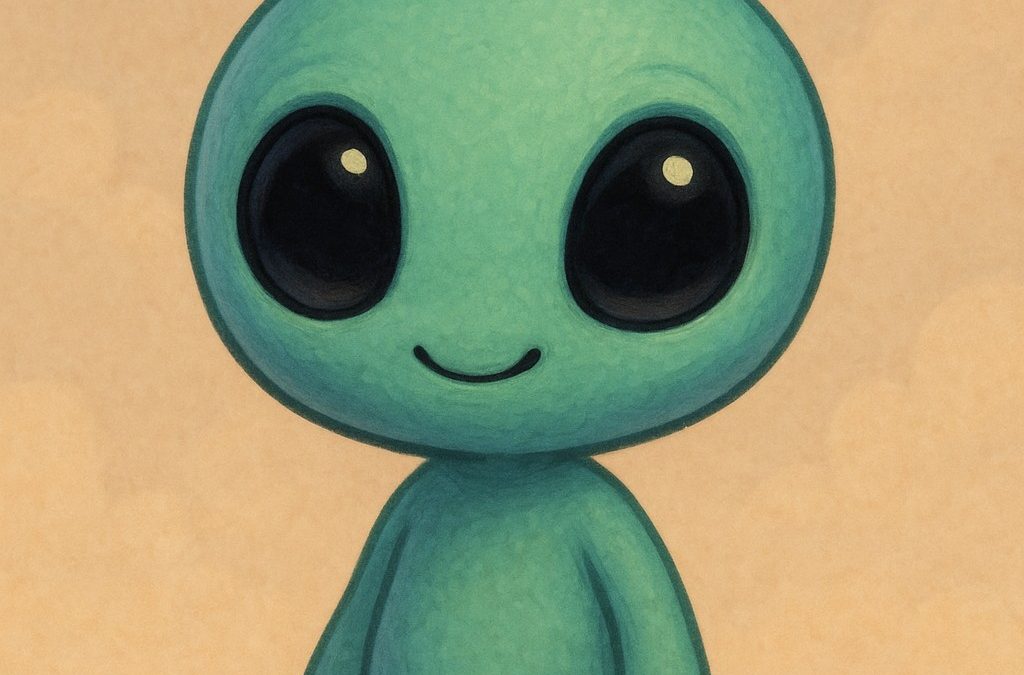
Let’s be honest: if a ship landed tomorrow and a group of very polite, very obviously non-human visitors stepped out, a lot of religious people would quietly panic.
Not because “God is disproved,” but because the interpretation of God that many people cling to is embarrassingly small.
As someone who cares deeply about consciousness, mystery, and all the strange ways humans tell stories about the universe, I keep circling this question:
If aliens exist, what happens to Christianity?
And how on earth (or off it) can one first-century Jewish carpenter represent the entire universe?
The Human-Centered Problem
Traditional Christianity, at least in its more popular forms, is very human-centric:
- Humans are made “in the image of God.”
- Earth is the stage.
- History is basically “us, our sin, our Savior, our afterlife.”
Now stretch that across a universe with:
- 13.8 billion years of cosmic history,
- billions of galaxies,
- and, quite possibly, countless intelligent civilizations.
Suddenly the story of one species on one rock starts to feel… cramped.
If there are other rational beings out there, we have to ask:
- Are they made in the image of God too?
- Did they “fall into sin” the way our theology claims we did?
- Do they have their own version of a savior?
- Or are they just stuck with our Jesus by default, like some forced cosmic subscription service?
You can see why this is disruptive. It doesn’t automatically destroy Christianity, but it absolutely attacks any version that assumes humans are the only real show in town.
The Cosmic Christ vs. The Local Jesus
Here’s where Christian theology gets interesting, and honestly more impressive than some of its followers.
Christianity doesn’t just say “Jesus was a nice guy who taught good morals.” It claims that:
- Jesus is the Logos—the divine “Word,” the rational/spiritual principle through which all things were made.
If you take that seriously, it’s already cosmic. This isn’t just a tribal god of the ancient Near East. It’s a claim that the same reality underlying the entire universe walked around as a human, in a particular time and place, to show us something about the nature of that reality.
Think of it like this:
You don’t have to run every physics experiment in every galaxy to know something about gravity. You can study it here and infer that the same law applies everywhere.
In a similar way (from within Christian thought), the life, death, and resurrection of Jesus are local events that supposedly reveal something universal about the structure of reality: that self-giving love, not brute power, is what sits at the heart of things.
If that’s true, then aliens don’t break the system. They just expand the audience.
Possible Theological Moves (If the Church Doesn’t Freak Out)
If aliens show up, Christians basically have a few options:
1. The One Logos, Many Contacts Model
In this view, the cosmic Christ—the Logos—is active everywhere in the universe, not just on Earth.
- We encounter this Logos in a very dramatic form through Jesus.
- Aliens might encounter the same reality another way:
- Through their own prophets, myths, or contemplative traditions.
- Through an inner moral and spiritual awareness they interpret in completely different symbols.
They may never call it “Christ,” but they’re still responding to the same underlying Source.
This fits well with a more mystical or philosophical Christianity, one that already sees God as bigger than any one religion.
2. Multiple Incarnations
Another option: God doesn’t just incarnate once.
- For humans: Jesus of Nazareth.
- For some reptilian species three galaxies over: something appropriate to their biology, culture, and psychology.
- The pattern—God entering creation in radical solidarity—remains the same, but the form changes.
To some believers, that sounds wild. To others, it’s obvious: if God can do it once, why on earth would God be limited to once?
3. Unfallen Aliens
There’s also the idea that some species never fell into the mess we did.
- They might be morally and spiritually ahead of us.
- They wouldn’t need redemption; they would need relationship, growth, and deeper communion.
In that scenario, Jesus’ death and resurrection are a local rehab effort for our particular catastrophe, not the only cosmic emergency plan ever activated.
Does Any of This “Prove” or “Disprove” Christianity?
No.
Aliens wouldn’t logically disprove the idea that:
- There is a conscious, creative ground of being.
- That ground of being has revealed itself in specific historical ways.
- Love, justice, and self-giving are more than personal preferences; they’re somehow woven into the fabric of reality.
What aliens would do is stress-test our religious egos.
Christianity has already had to swallow a few humbling pills:
- The Earth is not the center of the universe.
- Humans are not hand-crafted clay figures dropped into a static creation; we emerge from evolution.
Aliens would be the next step:
“By the way, you’re not even the only rational ones.”
Some forms of Christianity simply won’t survive that. You can already hear the knee-jerk responses:
“Aliens are demons.”
“If it’s not in the Bible, it’s from Satan.”
Those are defensive reflexes, not serious theology.
Other forms—those that already see God as the ground of all consciousness, all beings, all worlds—would adjust more easily:
“Of course there are others. Why would Love stop with us?”
Can One Jesus “Represent” a Whole Universe?
The question assumes that Jesus has to be a kind of cosmic politician, elected by universal vote.
I don’t think that’s the right frame.
It’s not that Jesus “represents the beliefs of the universe.” It’s that, in the Christian claim, Jesus reveals the character of the Source of the universe.
Whether you are human, alien, or something we don’t even have language for, you still have to deal with ultimate questions:
- What is reality like at its deepest level?
- Is the universe indifferent, hostile, or somehow responsive to love and meaning?
- Does consciousness matter, or are we just cosmic static?
The Christian answer, read at its best, is that the deepest reality is not brute force but self-giving love; not annihilation but transformation.
If that’s what Jesus is about, then his significance isn’t limited by species. We might not be the only ones invited into that mystery. We might just be the first ones, on this planet, to fumble toward language for it.
Aliens wouldn’t make Christianity impossible. They would force it to grow up—or reveal how small it always was.