
The Italian Golden Age: History of the Sports Car Part III
December 29, 2025
Why You Should Be Watching Sports Car Racing (IMSA + WEC): The Manufacturer Wars You Can Actually Relate To
January 11, 2026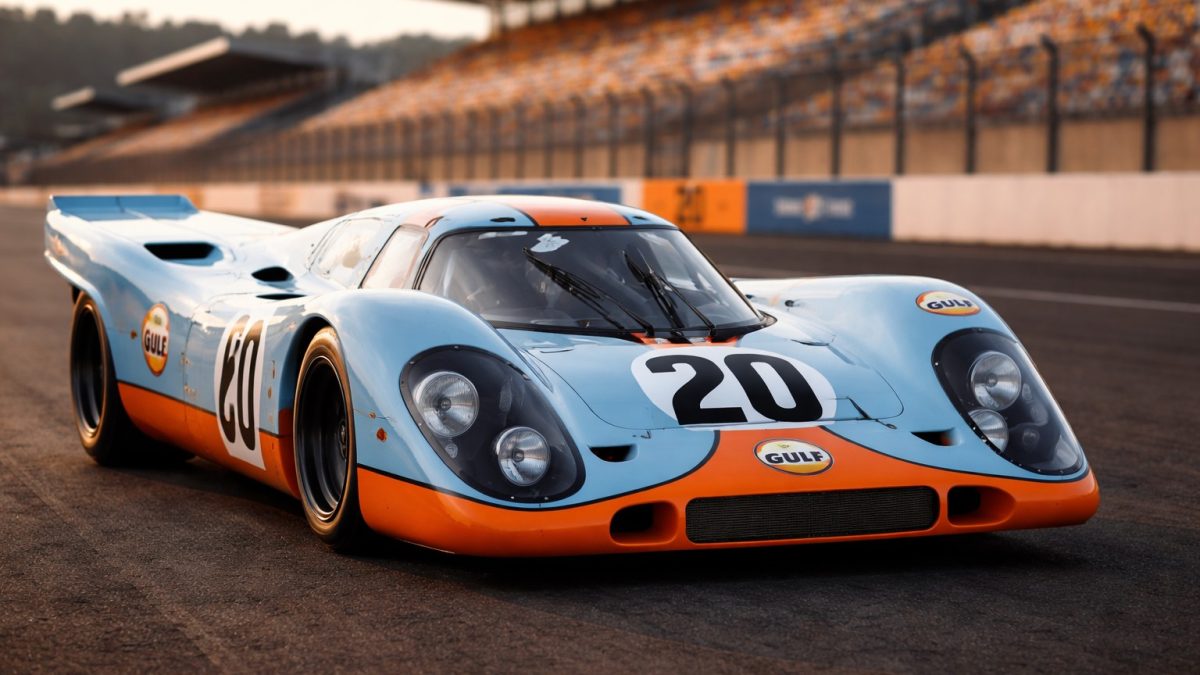
When I was nine years old, in a tiny Missouri town where the biggest excitement was the arrival of a new Dairy Queen flavor, my parents took me to see a Steve McQueen movie at a second-run theater. They thought they were buying a couple hours of popcorn and entertainment. What they actually did was drop their impressionable child into the gravitational field of Le Mans — a film that would quietly rearrange the architecture of his life.
Even now, I can still feel the cool, stale air of that theater. The hum of the projector. The seats that barely reclined. Nobody involved — least of all my parents — had any idea this thing was about to sink its teeth in.
But Le Mans isn’t just a movie.
It’s a rite of passage.
And for many of us, it was the opening chapter in a much bigger cinematic universe of motorsport — a universe that spans Formula 1, IndyCar, NASCAR, endurance racing, and even the myth-making world of Pixar. These films didn’t just entertain us; they mentored us. They taught us the language of speed, risk, engineering, and obsession.
So let me tell the story of that night in Missouri — and along the way, the story of the ten racing films every true enthusiast should know.
Where It All Began: The Spell of Le Mans (1971)
Machines and silence. That’s what I remember first.
I didn’t understand the plot — largely because there isn’t one — but I understood the 917. I understood the long shots of headlights cutting through the Sarthe night. I understood that McQueen wasn’t playing a hero so much as a man possessed.
Le Mans is one of the ten essential films because it asks something rare of the viewer:
“Can you feel the world through the engine?”
And if the answer is yes — truly yes — then you’ve crossed a threshold into the culture.
But Le Mans sits in a lineage, and to fully appreciate why this film mattered so much, you have to understand the cinematic family it belongs to.
The Ten Films Every Car Enthusiast Should See (and Why They Matter)
Here’s the canon — the films that shaped racing culture on screen and, often, in real life. I’ll place them in the same emotional order I discovered them.
1. Grand Prix (1966)
Before Le Mans, there was Grand Prix — John Frankenheimer’s hyperreal, split-screen, in-car symphony of 1960s Formula 1.
This film didn’t just show racing; it invented the grammar of how racing should be filmed.
If motorsport has a visual DNA, this is where the helix starts.
2. Winning (1969)
Paul Newman’s gateway drug into actual racing.
Shot at real Indy circuits, using real drivers, this film gave American open-wheel its cinematic heartbeat.
Newman walked in as an actor and walked out a racer. That tells you everything.
3. Le Mans (1971)
My origin story.
A film so committed to authenticity it sometimes forgets it’s a film.
But for the initiated, it becomes something sacred.
4. Heart Like a Wheel (1983)
Not many people expect a drag-racing biopic to show up on lists of the greatest racing films — until they see it.
Shirley Muldowney’s fight for a place in top fuel is as fierce and human as racing cinema gets.
5. Days of Thunder (1990)
NASCAR’s myth-making blockbuster.
Critics were mixed; fans were not.
It’s flashy, loud, melodramatic — and absolutely central to understanding how millions of Americans fell in love with stock-car racing in the 1990s.
6. Cars (2006)
Pixar, yes. A kids’ movie, yes.
But also a profound meditation on Route 66, racing culture, aging heroes, and what happens when speed becomes a religion.
If you don’t cry during the “Doc Hudson” beats, check your oil pressure.
7. Senna (2010/2011)
The gold standard of racing documentaries.
Ayrton Senna’s life and death are handled with such intimacy, clarity, and emotional weight that even non-fans walk away changed.
This is the soul of Formula 1 — unfiltered.
8. Rush (2013)
Hunt and Lauda.
Fire and ice.
Ron Howard turns the 1976 F1 season into a study in psychology, rivalry, and respect.
It’s one of the great character pieces in motorsport storytelling.
9. Ford v Ferrari (2019)
The corporate epic.
A meticulously crafted retelling of the battle for Le Mans in 1966, where egos and engineering are equally explosive.
If Le Mans is a poem, Ford v Ferrari is a novel.
10. Speed Racer (2008)
Once dismissed as chaotic neon nonsense (which I think it still is), now widely regarded as a visionary depiction of speed, motion, and digital cinema.
This is what happens when racing becomes myth and art at the same time.
Why These Films Matter — Not Just to Me, but to Car Culture Itself
Each of these ten films does something essential:
- They preserve eras of motorsport long after the cars have retired.
- They initiate new generations into the romance of speed.
- They remind us that racing is not just sport — it’s psychology, engineering, courage, grief, triumph, madness, camaraderie, and occasionally stupidity.
- They keep the mythology alive.
For me, Le Mans opened the door.
These other films built the house.
And that night in Missouri, I didn’t know any of this. All I knew was that something ancient and mechanical had reached out from the screen and placed its hand on my shoulder — saying, essentially:
“Pay attention. This is going to matter.”
It did.
It still does.