

My mildly reckless, vaguely scientific prediction for F1 2026
January 19, 2026
When Wedges and Turbos Saved the Sports Car
February 1, 2026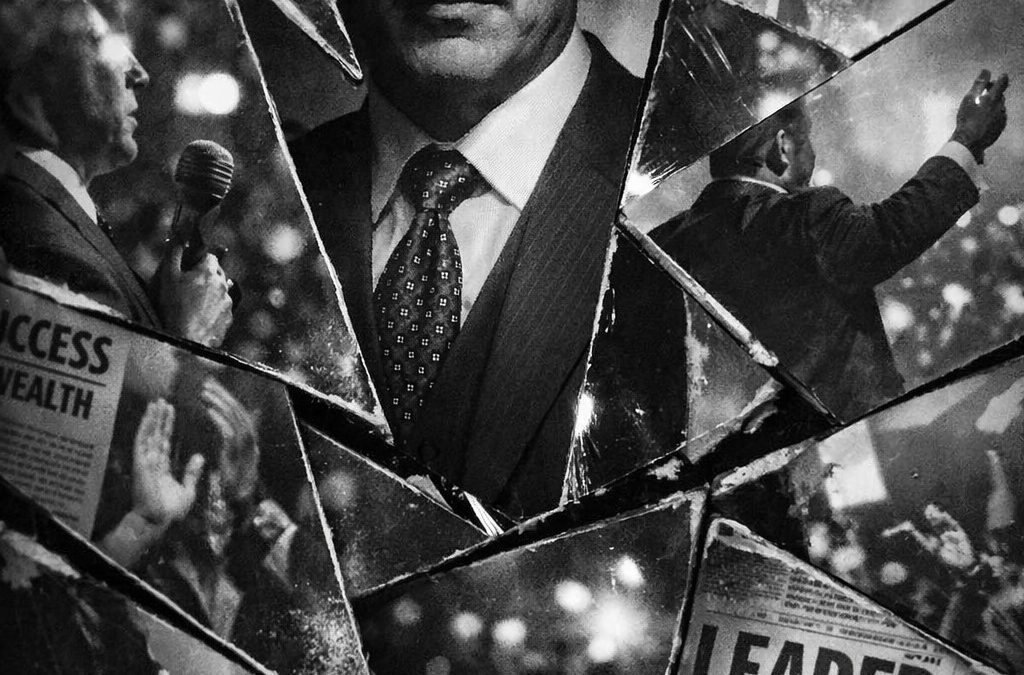
If you haven’t seen Citizen Kane (1941), here’s the elevator pitch: America’s loudest self-made titan dies in a palace of stuff, and the world scrambles to “explain” him—by assembling a highlight reel of his image. The film opens with a faux-newsreel obituary (“News on the March”) that sells Charles Foster Kane as a completed product: tycoon, patriot, kingmaker, legend. Then the movie calmly takes that product apart and shows you the wiring.
That’s the first obvious bridge to Trump: both men are, above all, produced.
The manufactured man
Kane doesn’t just own newspapers—he authors reality for mass consumption. He learns early that if you can control the picture, you can control the feeling, and if you can control the feeling, you can rent the public’s soul month-to-month. (Cancellation policy: brutal.)
Trump’s modern version of this is the reality-TV era: the “business genius” persona wasn’t merely reported—it was packaged, edited, and marketed into a recurring character the audience could recognize in three seconds.
So in both cases, you’re not watching a human being so much as a brand management system with a heartbeat.
Narcissism as architecture (not diagnosis)
Let’s not play clinician on LinkedIn. But we can talk about a pattern the film practically frames in neon: the need to be reflected back as grand, inevitable, adored.
Kane collects people like he collects art—proof objects. Friends, wives, employees, voters: mirrors arranged at flattering angles. When the reflection stops cooperating, Kane doesn’t adapt; he escalates. He buys louder mirrors. Bigger rooms. A louder version of himself.
Trump’s public persona runs on a similarly external fuel source: attention, dominance, applause, “ratings,” crowd size—metrics that function like emotional oxygen. When the numbers wobble, the persona doesn’t quietly self-correct; it doubles down, because the point is not truth. The point is projection.
Persona vs. person: the film’s cruel magic trick
Kane is ruthless in how it treats biography. It keeps asking: Who was he really? And every witness offers a different Kane—because each person only knew the version that benefited Kane at the time.
That’s the tell: when a man is mostly image, he becomes plural. He is whatever the room requires, and the room becomes his drug.
Trump is also a collage: mogul, outsider, strongman, martyr, savior, comedian, bully, victim, winner—often in the same paragraph. And the more contradictory the collage, the more it reveals the central mechanism: the persona is the strategy.
The real lesson: the emptiness inside the spotlight
Here’s what Citizen Kane ultimately whispers (then shouts): a life built on image ends up owned by image. When you live as a projection, you become dependent on the audience’s consent to exist. You can buy objects, loyalty, headlines, even institutions for a while—but you can’t buy the one thing the narcissistic machine actually wants: unconditional reflection.
And that’s the takeaway—uncomfortable, but clarifying:
Trump is nothing but a fleeting, fragile image subject to the approval of others.
Not a titan. Not a destiny. An act that requires constant clapping to remain real.
(Which is why the most subversive civic action is sometimes boringly simple: stop feeding the projection. Start looking past the screen.)