

Hope Is Not Dead. It’s Just No Longer Cheap.
March 16, 2026
Why the Ferrari 458 May Be the Best First Ferrari
April 25, 2026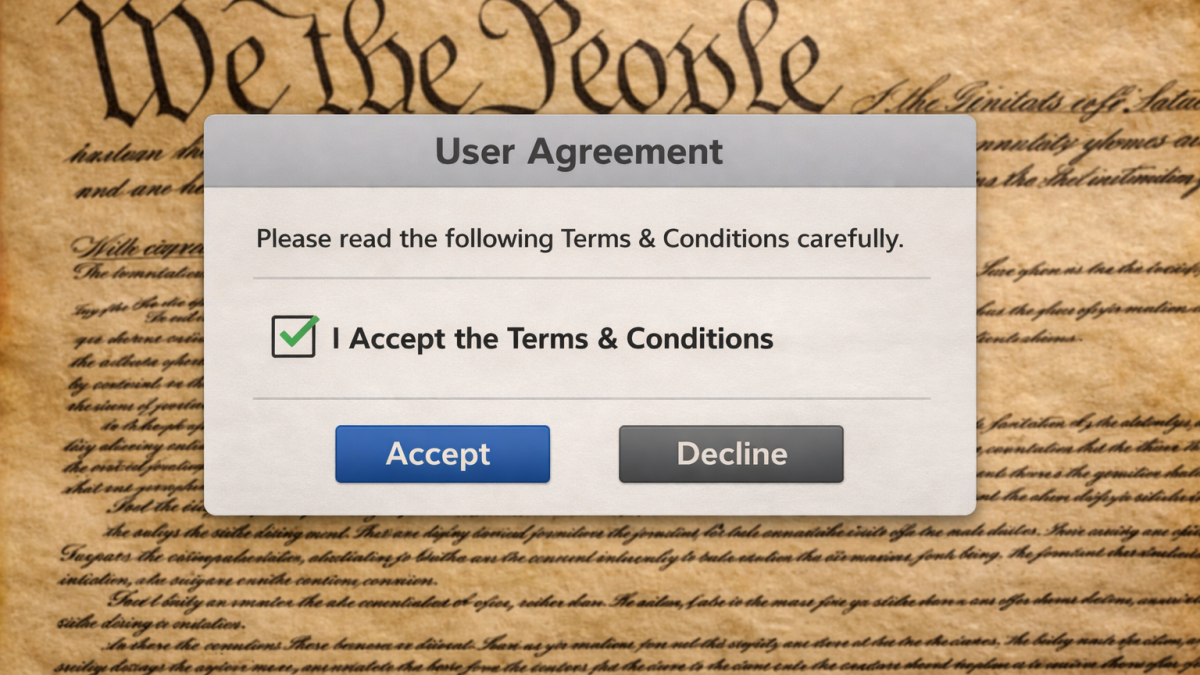
There was a time in America when “respect for the rule of law” was not considered a laugh line.
Now we have a president who seems to treat judges the way a casino patron treats slot machines: wonderful when they pay out, obviously corrupt when they do not.
That is the real damage. It is not simply that Donald Trump attacks courts, prosecutors, and legal constraints when they inconvenience him. It is that he models contempt for the very idea of institutional restraint. And when the most powerful person in the country behaves as though law is merely an obstacle course for his ego, one should not be terribly shocked when public trust begins to rot.
To be clear, the judiciary is not dead. Courts are still issuing rulings. Judges are still checking executive power. The machinery still functions. But democratic systems do not run on machinery alone. They also run on legitimacy, habit, and a broadly shared willingness to accept that one does not always get one’s way. That civic maturity is not glamorous, but it is the difference between a republic and a tantrum.
The trouble is that Trump has spent years turning legal accountability into political theater. If a ruling helps him, the system is glorious. If it restrains him, the system is rigged. This is not leadership. It is adolescence with better tailoring.
And yes, that attitude spreads. When leaders treat judges as partisan enemies, millions of citizens begin to absorb the lesson that courts are not arbiters to be respected, but weapons to be captured. At that point, “law and order” becomes one of those charming phrases that means precisely nothing beyond my side should win.
Public confidence in the judicial system has already fallen to striking lows, and one cannot pretend that this steady carnival of institutional delegitimization has helped. Trump did not invent American distrust, but he has refined it into a performance art. He has made suspicion feel patriotic, grievance feel statesmanlike, and defiance of constraint look like strength. It is, in fact, the opposite. A president who cannot tolerate limits is not a strong leader. He is simply a man offended by reality.
The danger, then, is not immediate Hollywood-style anarchy, with flames in the streets and violins playing somewhere in the background. The danger is slower, drearier, and in some ways worse: a country that begins to see law as arbitrary, courts as tribal instruments, and constitutional limits as quaint suggestions for lesser people.
That is how civic decay works. Not always with a bang. Sometimes with a smirk, a slogan, and a mob of applause for the man who insists that every restraint placed on him is an insult to the nation.
A healthy democracy requires more than elections. It requires leaders who can lose arguments, obey rulings, and refrain from behaving as though the Constitution were an optional user agreement. At the moment, that seems rather a lot to ask.
But it should not be.