

Why the Ferrari 458 May Be the Best First Ferrari
April 25, 2026
Stop Chasing “Higher Vibrations.” Seek Deeper Resonance.
May 11, 2026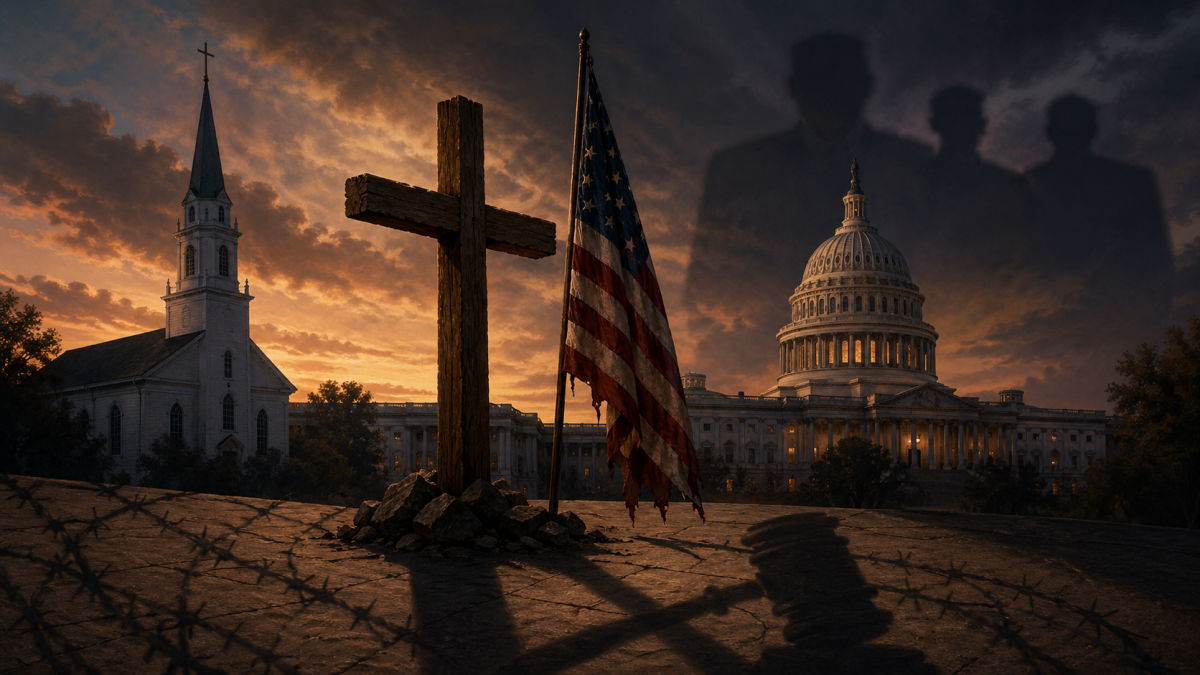
hypocrisy, corruption, and the steady erosion of democratic norms while still insisting they stand with Christ. The answer, I think, is unpleasantly simple: for many of them, Christianity is no longer the governing ethic. It is the costume. The real engine is power.
That sounds harsh, but the evidence points in that direction. Public Religion Research Institute has found that Christian nationalism is strongly correlated with authoritarian attitudes, and its more recent national mapping shows the same basic pattern again: the stronger the Christian nationalist outlook, the stronger the support for authoritarian politics. In plain English, this is not mainly about humility, mercy, or the Sermon on the Mount. It is about hierarchy, obedience, domination, and the fantasy that one’s own tribe should rule the nation. ()
That is why the hypocrisy barely slows them down. If your real religion is power, then almost any sin can be excused in the service of the “larger cause.” Cruelty becomes toughness. Dishonesty becomes strategy. Corruption becomes necessary compromise. The suffering of outsiders becomes regrettable but acceptable. And because all of this is wrapped in the language of God, country, family, and order, it can feel righteous even while behaving like the very opposite of Christianity.
This is also why arguing with them purely on theological grounds often goes nowhere. Theology is not irrelevant, but it is not the deepest layer of the problem. The deeper layer is identity fused with grievance and fear. Many Christian nationalists seem less interested in following Christ than in recovering cultural control. They fear demographic change, pluralism, intellectual freedom, secular institutions, and any world in which they are no longer the default moral authority. “Christian” in this context often means not a life of sacrificial love, but a claim to ownership over the country itself. PRRI’s state-by-state work measures exactly that fusion of Christianity, American identity, and government power. ()
And that brings us to the Heritage Foundation. Heritage presents itself, quite openly, as a conservative policy institution devoted to shaping government. Its own materials describe Project 2025 as a coordinated effort to provide the next conservative administration with policy plans and trained personnel. That matters. This is not random outrage from scattered cranks. It is organized, patient, professionalized, and institutionally ambitious. ()
So what do we do?
First, we stop pretending this is merely a disagreement among sincere Christians. It is, in large part, a political power project wearing Christian language like armor. That distinction matters, because if you misdiagnose the illness, you prescribe the wrong cure. You do not defeat a machine like this with hand-wringing, sarcasm, or endless social media despair. You defeat it with rival institutions, legal pressure, local organizing, persuasive language, and moral stamina.
Second, decent Christians need to say, plainly and repeatedly, that this movement does not speak for them. One of the great mistakes of the broader democratic coalition has been surrendering the religious lane to extremists. That is absurd. Christian nationalism should not be answered by contempt for Christianity, but by better Christians, braver clergy, and more serious moral witnesses. The most effective rebuke to a false gospel is not smug atheism. It is a truer gospel.
Third, we need to fight locally and legally. School boards. State legislatures. County election offices. Attorneys general. Judgeships. Public universities. Local media. These are the pressure points where anti-democratic ideology becomes lived policy. Groups focused on free and fair elections and democratic guardrails matter because this is where the actual machinery lives. ()
Fourth, we should insist on accountability when churches and charities cross legal lines into campaign activity. The IRS is clear that 501(c)(3) organizations, including churches, are restricted from political campaign intervention on behalf of or in opposition to candidates. If religion is going to enter politics as a tax-advantaged weapon, then the public has every right to demand scrutiny. ()
And finally, we need courage without melodrama. The temptation is either panic or exhaustion. I understand both. But this movement gains strength when decent people become demoralized, atomized, and convinced that nothing can be done. Plenty can be done. It just is not glamorous. It is the work of showing up, funding good people, supporting good journalism, defending pluralism, protecting institutions, and refusing to let bullies define either Christianity or America.
My own view is this: Christian nationalism is dangerous not because it is too Christian, but because it is not Christian enough. It has borrowed the symbols of faith while abandoning too much of its soul. It speaks incessantly of order while sowing cruelty. It invokes morality while chasing domination. It wraps itself in the cross while reaching for Caesar.
That should offend believers, nonbelievers, patriots, and anyone with a functioning conscience.
The answer, then, is not despair. It is resistance with clarity. Religious liberty for everyone. Government establishment for no one. Democracy over theocracy. Character over grievance. Compassion over cruelty. And a refusal to let the worst people in the room define what faith, citizenship, or decency are supposed to mean.
Because that fight is still worth having.